Direct-to-consumer webstores succeed or fail based on one variable: whether the payment infrastructure was built for retail or built for games. Here’s the breakdown.
Studios evaluating a direct-to-consumer webstore almost always start with the same figure: a 25–30% savings on platform fees. That number gets the project approved, but it’s a poor way to measure whether the project actually succeeds. The bigger opportunity in D2C is the direct player relationship it creates – retention, trust, lifetime value, and growth channels that a platform storefront structurally cannot offer. Webstores that chase the fee savings and stop there tend to underperform, because they end up built like generic retail – and gaming customers don’t behave like generic retail customers.
This guide breaks down why that mismatch happens, what a genuinely player-first D2C setup looks like, and where standard payment infrastructure falls short.
Why Generic E-Commerce Logic Doesn’t Transfer to Gaming
Conventional e-commerce is built around a single transaction: a customer arrives, submits payment details, receives a product, and leaves. Modern games don’t operate on that model. They’re live-service platforms that monetize continuously over years rather than in single moments, with cross-platform play, user-generated content, and constant content updates as baseline expectations. Player communities also develop genuine, felt ownership over the ecosystems they’re part of – a dynamic that has no real equivalent in typical retail.
Two failure patterns show up consistently when studios ignore this difference:
- Support turns into a black box. A server delay at the moment of purchase, where in-game currency doesn’t appear instantly, leaves the player with no recovery path except a support ticket – one that can take days to resolve in a product built around continuous engagement.
- Retention tactics work against the studio. Traditional platforms often make cancellation deliberately difficult, betting that friction buys another billing cycle. In gaming, this backfires on two fronts: it damages community trust, and it pushes players back toward the app stores the studio was trying to move away from. It’s also increasingly a compliance issue – new EU regulation requires a simple, direct cancellation mechanism.
The Five Levers That Determine Whether D2C Works
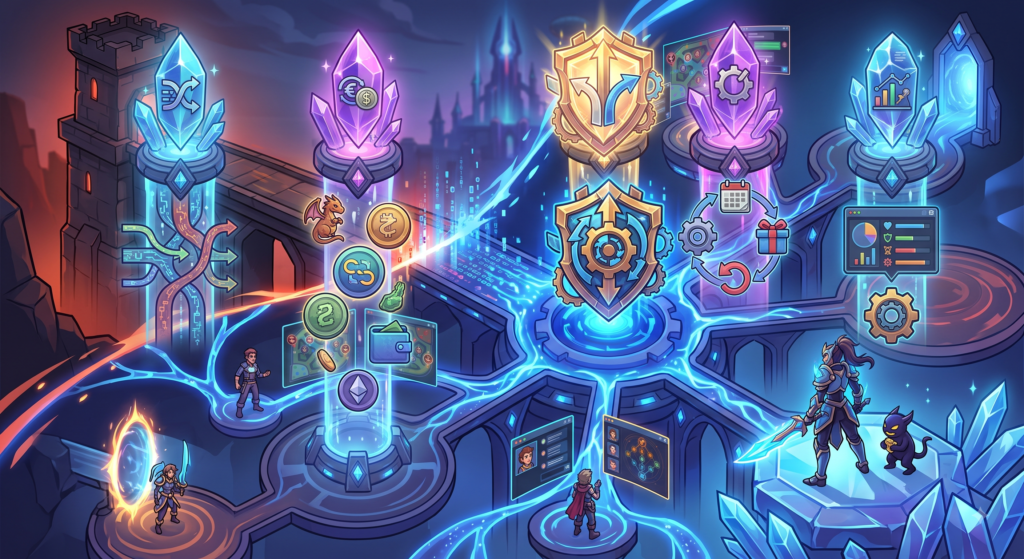
A player-first webstore functions as an extension of the game itself rather than a separate retail funnel. Five factors consistently determine outcomes:
| Lever | What It Does | Reported Impact |
| Payment routing | Routes transactions across multiple acquirers instead of one processor | 10–15%+ more successful payments |
| Local payment methods | Offers the payment methods players already use daily, not just local currency | 46–67% of transactions in top regions run through local methods |
| Checkout confidence | Surfaces BNPL, installments, and transparent pricing before checkout | Average transaction value up 60–100%+ over card-only checkout |
| Lifecycle engagement | Abandoned-basket recovery, timed follow-ups, easy subscription cancellation | Trades short-term revenue for repeat-spend trust |
| Contextual offers | Targets the right offer to the right player at the right moment | Reduces decision friction without relying on blanket discounts |
The table above isn’t a menu to pick from – the five levers work together. A studio that nails local payment methods but leaves cancellation buried in a settings menu three levels deep is still going to leak trust, and trust is what the other four levers depend on. Tebex’s checkout infrastructure was designed to cover all five simultaneously rather than treating them as separate add-ons.
Why Standard Payment Gateways Can’t Deliver This on Their Own
A common assumption is that a player-first experience is achievable by putting a well-designed storefront in front of any standard payment gateway. That assumption doesn’t hold, because standard gateways function as passive infrastructure – they move money and leave tax compliance, fraud liability, and dispute management entirely with the studio.
That passivity undercuts every part of a player-first approach:
- Subscription friction. Generic gateways typically lack native tools for easy subscription control, so cancellation stays clunky even when a studio wants it to be simple.
- Localization gaps. They process standard cards competently but often lack the regional payment options that make checkout feel local rather than foreign to international players.
- Blunt fraud handling. Fraud filters built for general retail tend to be rigid, blocking legitimate purchases while still missing genuine chargeback abuse.
- No concept of community. There’s typically no built-in way to credit a content creator, recognize a returning player’s status, or reward loyalty beyond a generic discount code.
Studios that end up managing all of this manually are effectively running a small in-house payments operation – time and headcount that comes directly out of what could otherwise go toward building the actual player community. This is the specific gap that gaming-focused Merchant of Record platforms like Tebex are built to close.
Where a Merchant of Record Model Fits In
One structural way studios address this gap is by working with a Merchant of Record (MoR) rather than a standard gateway. As the legal merchant of record, an MoR absorbs the transaction risk and compliance burden directly rather than passing it back to the studio. Tebex is one example of an MoR built specifically around gaming: as the legal merchant, it takes on chargeback fees, defense costs, and administrative burden, offers a single integration covering 130+ local and global payment methods across 100+ currencies, and includes built-in tools for subscription management and cart-abandonment recovery.
The distinction that matters isn’t the MoR label itself – it’s whether the infrastructure was designed around gaming’s transaction patterns (high-frequency, community-driven, live-service) or adapted from general retail after the fact.
Bottom Line
D2C represents a genuine structural opportunity in mobile monetization, but margin recovery is the smaller half of the value. The larger half is a direct player relationship that a platform storefront cannot provide by design. Studios that succeed with D2C long-term won’t be the ones that captured the biggest fee savings on day one – they’ll be the ones whose payment infrastructure was built to earn player trust continuously, not just process a transaction once.
That kind of trust isn’t cosmetic. It’s operational, and it has to be engineered into the checkout from the start.
FAQ
Q: What’s the practical difference between a player-first D2C webstore and a standard e-commerce store?
A: A standard store optimizes for a single conversion event. A player-first webstore is built as an extension of the live game – instant delivery, safe community dynamics, painless subscription management – and optimizes for long-term retention instead of one transaction.
Q: Is fee savings really the main reason studios should consider D2C?
A: It’s a real and often significant benefit, but it’s the smaller part of the opportunity. The larger value is the direct player relationship D2C creates – data, retention tools, and growth channels a platform storefront doesn’t offer.
Q: What exactly does a Merchant of Record take on that a standard gateway doesn’t?
A: As the legal merchant, an MoR such as Tebex absorbs chargeback fees, defense costs, and dispute administration, along with global tax compliance and fraud liability, so those burdens don’t sit with the studio.
Q: Why does a gaming-specific MoR matter more than a general-purpose payments provider? A: Gaming transactions are higher-frequency and more community-driven than typical e-commerce. A gaming-focused MoR builds tooling around that specifically – localized payment coverage, abandonment recovery, frictionless subscriptions – instead of repurposing infrastructure designed for general retail.