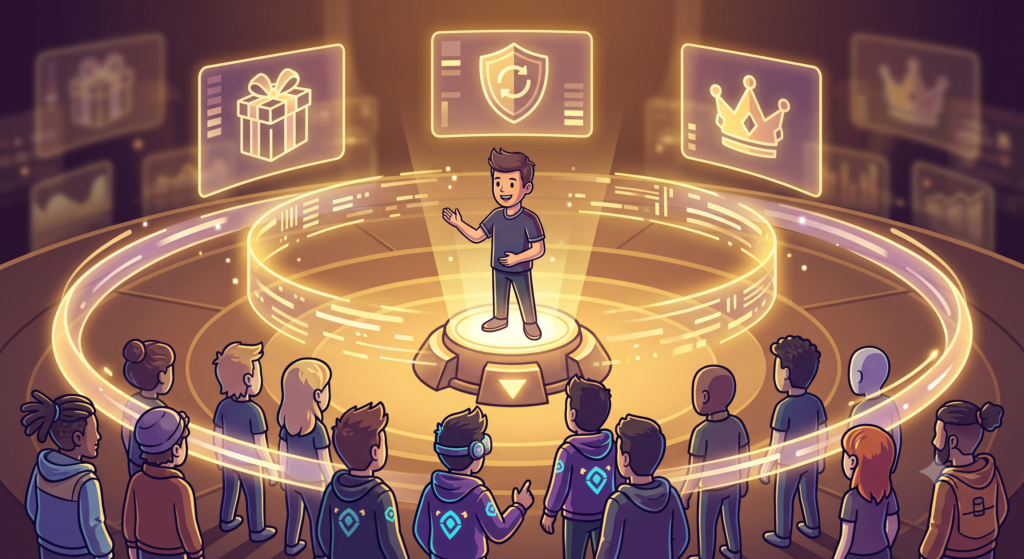
The real payoff of direct-to-consumer game sales isn’t the 25-30% in platform fees a studio keeps – it’s the direct player relationship that a webstore makes possible, which platform storefronts structurally cannot provide. This guide breaks down what D2C actually changes for a studio, what it costs to run properly, and how the main merchant-of-record providers in the space compare.
What D2C actually is
Direct-to-consumer selling means a studio sells items, DLC, subscriptions, or full games through its own webstore rather than routing every purchase through Steam, Apple, or Google. The most commonly cited reason to do it is cost: studios keep the fee difference that would otherwise go to a platform, sometimes marketed as up to 25%. Regulatory shifts in multiple countries have made this more viable at scale by opening space for developers to link out to external payment pages instead of relying entirely on app-store billing.
Why the fee-savings framing understates the value
Fee savings are real but secondary to a bigger structural change: ownership of the player relationship. A platform-run storefront gives a studio aggregate sales data at best. A direct storefront gives it visibility into individual player cohorts, the ability to tailor offers to specific segments, and control over payment experience by region – none of which a platform intermediary allows.
Industry framing of this shift increasingly describes it as removing a wall between a studio and its players, rather than negotiating a better fee split. That direct line is what makes targeted loyalty programs, localized payment methods, and cart-recovery messaging possible in the first place – tools a platform storefront simply doesn’t hand over.
Why this is happening now, not five years ago
Two forces are driving the shift simultaneously:
- Regulatory pressure. Court rulings and policy changes across several countries have chipped away at exclusive app-store billing requirements, giving developers room to route purchases through their own checkout.
- Platform risk-shifting. Platforms are pulling back how much payment risk they absorb for developers. Google Play’s 2026 policy change holding developers responsible for disputed purchase amounts is a concrete recent example.
Together, these make D2C a live operational question for most mid-size and larger studios, not an optional experiment.
The operational cost nobody puts on the savings slide
Selling direct means a studio takes on responsibilities a platform used to absorb:
- Sales tax calculation and remittance in every jurisdiction with paying players
- Fraud screening at checkout
- Chargeback liability
- Support for dozens of local payment methods, not just cards and PayPal
That last point is easy to underestimate. In Switzerland, roughly 40% of consumer payments run through a local method called Twint rather than a card. Brazil shifted from cash-based Boleto vouchers – once responsible for up to 90% of the country’s online purchases – to the instant-payment system Pix in under three years. A studio without coverage for the payment method a market actually uses isn’t losing that sale to a competitor; it simply can’t collect it.
Why retention matters more than acquisition right now
Newzoo’s Global Games Market Report found that worldwide payer growth outpaced revenue growth in 2025, while new-player growth slowed to roughly 2–3% annually in mature markets like Europe and North America. New buyers are harder to find, which shifts the priority toward extracting more value from existing players – a retention problem that a direct player relationship is specifically built to address.
Reported figures from the space illustrate the scale of that opportunity: local payment method availability has driven measurable shares of launch-week revenue for major titles, and abandoned-checkout recovery messaging has recovered roughly a third of purchases that would otherwise have been lost.
Comparing the leading merchant-of-record providers for game studios
Studios that want the benefits of D2C without building tax, fraud, and payment infrastructure in-house typically work with a merchant-of-record (MoR) partner, which takes on legal and financial responsibility for the sale. Three of the most established options in gaming are compared below.
| Tebex | Xsolla | FastSpring | |
| Origin | Built for game-server and creator-content | Established, provider across the video game industry | Merchant of record for digital goods generally |
| Model | Merchant of record | Merchant of Record | Merchant of record |
| Notable strength | 100% Chargeback protection. Also, Loyalty and retention tooling (gift cards, abandoned-checkout recovery) built specifically around a player-first model | Long track record across game types | Strong general-purpose MoR infrastructure spanning multiple digital industries |
Bottom line
Evaluating D2C on fee savings alone captures a fraction of its value. The larger return comes from owning a direct, one-to-one player relationship – understanding player cohorts, tailoring payment experiences by region, and converting one-time buyers into repeat supporters. That shift also comes with real operational weight: tax compliance, fraud prevention, and payment-method coverage that scales with every new market a studio enters. For studios without in-house expertise in that stack, working with a merchant-of-record partner like Tebex is what makes capturing the relationship value practical without absorbing the underlying risk alone.
FAQ
Q: What is the main advantage of direct-to-consumer (D2C) game sales?
A: While fee savings of up to 25–30% are the most commonly cited benefit, the larger value comes from owning the player relationship directly – enabling loyalty programs, localized payments, and long-term repeat spend that a platform storefront doesn’t allow.
Q: What does a studio need to manage when selling D2C?
A: Sales tax compliance across every jurisdiction with paying players, fraud screening, chargeback liability, and support for local payment methods beyond cards and PayPal.
Q: Why are local payment methods so important for game studios?
A: In some markets, a single local method covers a large share of consumer payments – Twint in Switzerland and Pix in Brazil are examples – so a store limited to cards and PayPal can miss a meaningful share of willing buyers.
Q: How does Tebex operate as a merchant of record?
A: Tebex takes on sales tax calculation, remittance, and regulatory compliance across the countries where a studio sells, along with fraud screening and chargeback liability, removing the need for a studio to register for tax collection in every market with paying players.
Q: What happens to chargebacks under a merchant-of-record model like Tebex’s?
A: Tebex absorbs chargeback costs on behalf of the studios it works with, including the dispute fee, administrative costs, and the refund if a dispute is lost – rather than passing both the chargeback fee and the transaction amount back to the studio, which is common with MoR providers.